
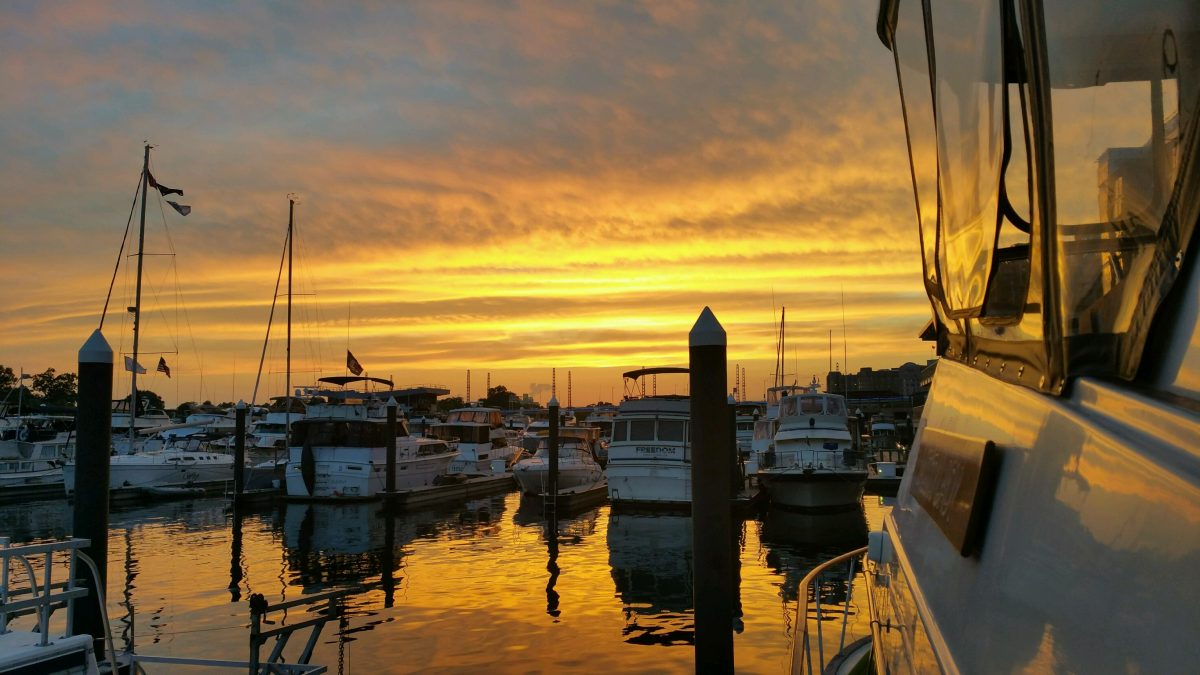
Thursday, March 3, 2016 – At the Anchor Bay East Marina. Dundalk, Maryland
I arrived at the marina at 8:45am for the start of the survey and sea trial activity scheduled for 9:00. Yeah, I know I am sort of weird that way, always have to be ahead of schedule rather than behind…. A long drive from the Eclipse to the marina at Dundalk! Be glad when she is relocated down to the Washington, DC waterfront!
The Surveyor, Ken, the Owner, Ron and the Broker, Walt all were there on time. We decided to do the “haul out” and hull inspection first off. “Haul Out” is when the boat is lifted out of the water by a huge piece of equipment called a Travel Lift. We droved the yacht into the special slip and the Travel Lift operator began by lifting the straps to touch the bottom. Remember folks, this yacht weighs more than 55,000 pounds! What a machine that Travel Lift is. The Ron, Ken and I all disembarked from the yacht and the operator began the process of lifting her out of the water. When she was high enough to clear the edge of the dock, he moved further into the shipyard area so that Ken the surveyor could walk under her and perform his inspections.
During the inspection of the hull, the “zincs” were found to need replacing. Zincs are also referred to as “suicidal zincs” because the give up their volume to protect the other metal aspects of the yacht from the attacks of electrolytes and other nasty things that are naturally occurring in the water. Zincs were replaced on several areas of critical need around the aft end of the vessel.
Once the surveyor (sort of like a home inspector on steroids, except he is a certified marine engineer), completed the hull inspection, he gave me the word that she was sound and in excellent shape. He used a couple of instruments to look at the hull for water intrusion, weak spots, etc. YES!!!
We returned the boat to the water and motored it back out of that area to begin the sea trial. I was very impressed with Ron (the owner ) turned that huge boat around inside her own length using the engines only. One forward, one reverse and she simply spun around on her stern.
We pointed her toward the Bay and headed out. First up were two bridges that we would need to pass. Walt took the spotter station and discovered that even though the boat would clear (the Bridge is the highest point), it turned out that the three antennas were too high and we had to lower them to a horizontal position. This would have to be done once more when we returned.
Passing the second bridge the owner began to increase the speed of the yacht. Vessels this size to not accelerate rapidly (thank Goodness). After a few minutes we discovered that the starboard (right) engine was heating up past the normal. It appeared that either one of the lines providing cooling water, or the impeller (that moves the water through the engine) was not working properly. We headed back to the slip and continued with the rest of the inspection. The owner would have the starboard engine checked out and repair the reason for the overheating (not an engine problem, just an accessory thing). We would schedule another sea trial prior to the final transaction activity. This was actually a benefit, because now both my son, Cliff and my wife Charlotte would be available to make the sea trial trip. The rest of the inspection items were checked off and samples of the engine oil and transmission oil were taken for analysis. The survey report will be provided electronically, except for the sea trial, within 24 hours. Ken’s general observation was that this Bluewater Yacht was very stable, mechanically (except for the starboard thing) very good shape, and only small nits were identified. We expected those so no big deal.
We hope to schedule the second sea trial sometime next week if all parties can be available. Hoping for Fair Winds and Calm Seas.

 Misty Lady Thought and Comment