
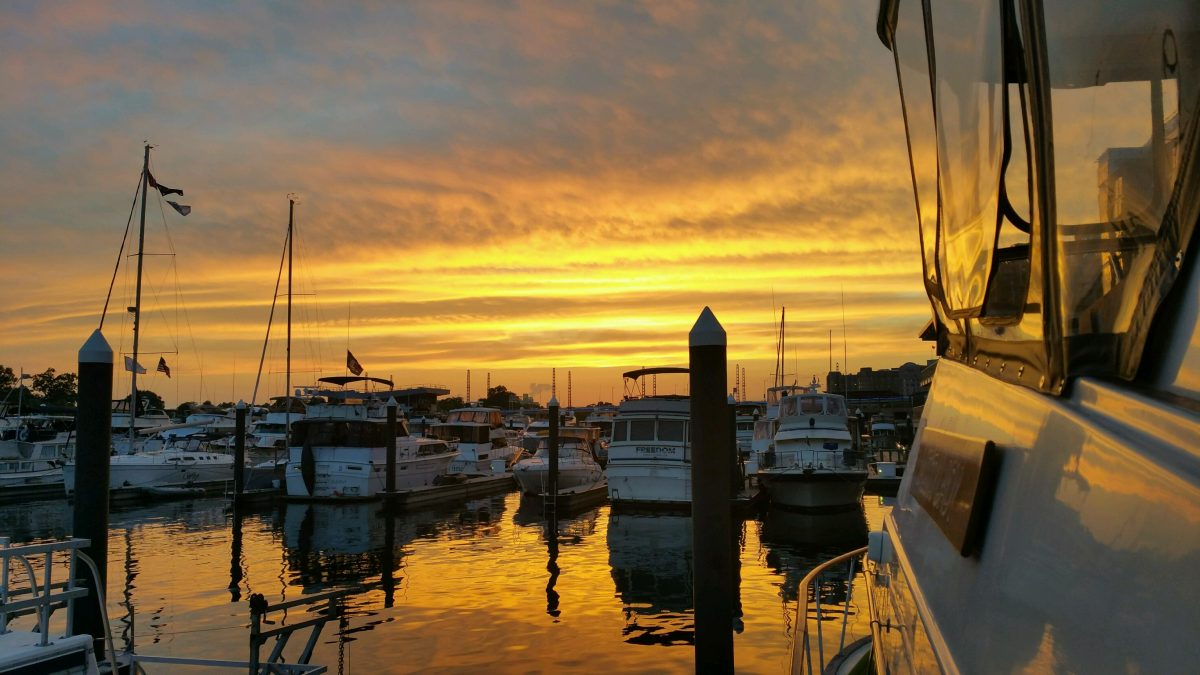
Here we are again, fast approaching the end of 2019. As I resume this blog entry it is near to the end of August and I can’t believe it has been over a year since I sat down with laptop and written of the adventures of living aboard. During this post, I will discuss our voyage last year down river a short distance as well as what living aboard a large motor yacht is like on a regular basis.
Bear in mind, the Misty Lady is not a new, upscale boat, she is almost 30 years old and has all the warts one would expect from an aged, senior member of the motor yachting community. She is still strong, her engines are powerful (moving over 50 thousand pounds of boat through the waters), and she provides us with about 1,000 square feet of living space. However, she is not one that you would see celebrities sipping champagne aboard, more like the regular crew, family and a couple of friends having cold soft drinks, sandwiches and appetizers. But we do have fun.
In mid-October of last year (2018), we attempted to make a voyage down river with my son Cliff, his family and one of the grand-daughter’s buddies from school. Our plan was to travel down river to Belmont Bay,into the Occoquan Bay and up the Occoquan River to the Occoquan Marina and take-on fuel. Then we planned to travel further down river to sight see and to give any who wanted a taste of piloting the big girl, under the watchful eye of the Captain. This voyage would serve multiple purposes,
- Allow us to refuel the Lady. She had not received added fuel since our departure from Edgewater in the October time frame of 2016. Her capacity is 500 gallons and we estimated she would require an addition of between 250 and 300 gallons to top off the tank.
- Comply with the Yacht Club’s annual certification of seaworthiness. Each year, by the end of the formal boating season (November 30), each yacht must prove to the Club officials that she is capable of moving under her own power. The requirement for minimal acceptance is to travel from the berthing slip, down the Washington Channel to the end of Hain’s Point near the confluence of the Potomac and Anacostia Rivers and return to the marina and the home slip. Our voyage would more than meet the requirement since we would be traveling more than 25 miles down river and return.
- Exercise the Lady’s engines, rudders and steering gear. The Lady had not been out of her slip for a real workout for months and it helps to keep the components all working properly to ensure that they are exercised often. (at least that’s my story and I am sticking with it)
- Have a nice day cruising the Potomac with family and friends. One of the prime reasons for owning a motor yacht is to enjoy time on the water, either by yourselves or with family and friends. We love the idea of our son and his family and our daughter going with us on travels up and down the river. We also hope in the near future(next season?) to have some of our friends who have expressed an interest in traveling with us to come aboard and enjoy a day on the water.
Voyage Start Day:
The day of our planned trip started off with a beautiful sky, forecasts of good breezes and a warm temperature. The family arrived around 8 am and we got everyone settled in. We started the preparations for casting off and departure, but when we attempted to start the large power generator, it would not turn over. Everything was in readiness, people were standing by to cast off lines and disconnect the power cables from the shore power source, but with the generator being stubborn, we could not depart. I called our diesel guru to ask what the problems might be and his response was either the starter was inoperative or the batteries were not charged. It was finally decided that we would cancel the trip until the technical folks could identify the actual problem, effect repairs and get the generator back on line. See, the refrigerator, television, and other components operate under AC power. We could do without the AC on most of the components, but the refrigerator was essential to keep our food from spoiling during the trip down and back.
The following week, the diesel technician determined that our battery bank, dedicated to the generator starting was in fact no longer serviceable and we needed to replace those batteries. Another technical person was contracted to acquire, install and test a new battery. This was finally finished two weeks after the failed trip. One thing we have learned in the years we have been live aboard boaters is that no repair work can be accomplished quickly. We, (the Admiral and I) decided that we would travel down to Occoquan Marina the next weekend after the generator battery was installed.
Unfortunately, our family travelers were unable to go with us, so we made the trip with just the regular Misty Lady Crew (me, Charlotte, Penny and The Duchess). Since it was just going to be the immediate crew, we decided to cast off in the mid-morning. We fired up the generator, disconnected from shore power, cast off and stowed the dock lines.
Charlotte manned the bow to let me know where our bow was in relation to the dock as I gently put the big girl into reverse and slowly backed out of our slip. The optimum words in this regard are “go slow, like a pro”. Speed leaving a slip is a recipe for crashing into a fellow member’s boat or the bulk head causing no end of consternation. The old Captain brought the Lady slowly out, basically with the throttles at idle allowing the props to turn enough for movement, and when Charlotte gave the word that our bow would clear the dock, I began to spin the old girl around using just the transmission for the two engine props, to align with the fairway leading to the Channel. Rudders are ineffective at such slow speeds because the props are not sending enough water against them to make a difference, so just using the transmission levers to forward or reverse depending on the direction you want the aft section of the boat to move.
Keeping our speed down to idle we moved up to the end of the fairway and after giving a required horn sounding notice (one medium blast of the horn) of our departure, we moved into the Channel, turning to port and taking a heading down channel toward the Potomac River.

As we moved down the Channel, past the old GangPlank Marina, now known as the DC Wharf Marina, we passed this big beauty. She is a 200 foot super yacht, with a cost somewhere in the 20 to 50 million dollar range.
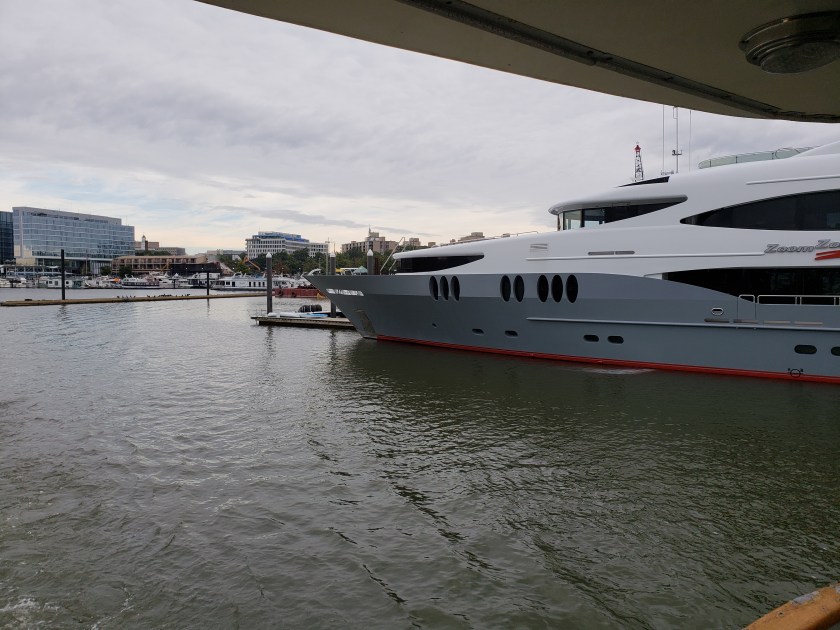
Shortly after this yacht, we left the Channel and entered the Potomac proper, we found the traffic increased quite a bit. The first we encountered was the Potomac River Water Taxi which traveled quite a bit faster than we, sort of ignoring the requirement for 6 knot maximum speed in that area of the river. There were several sail boats on the river and we spent considerable time ensuring that we were well away from their direction of travel.
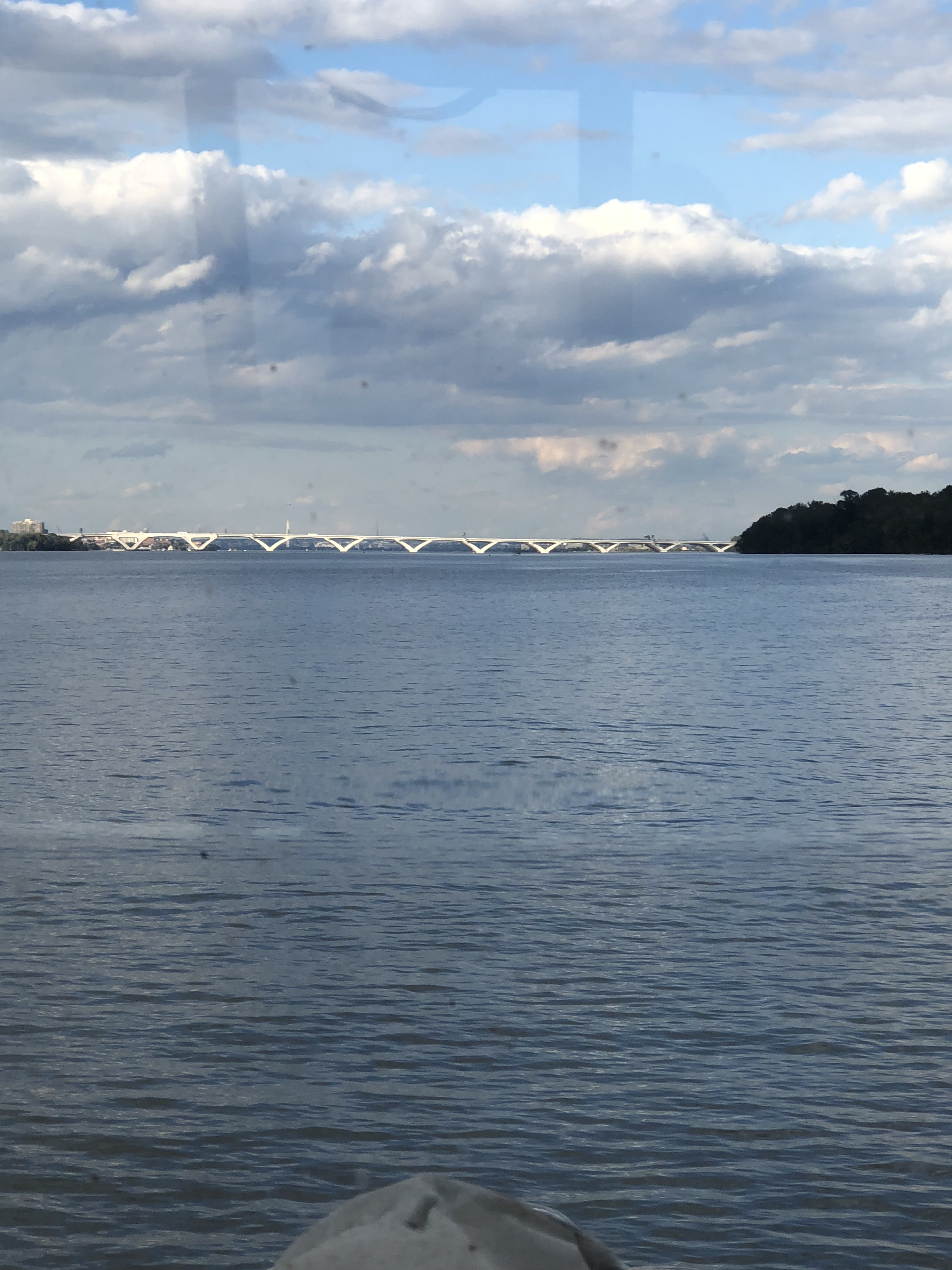
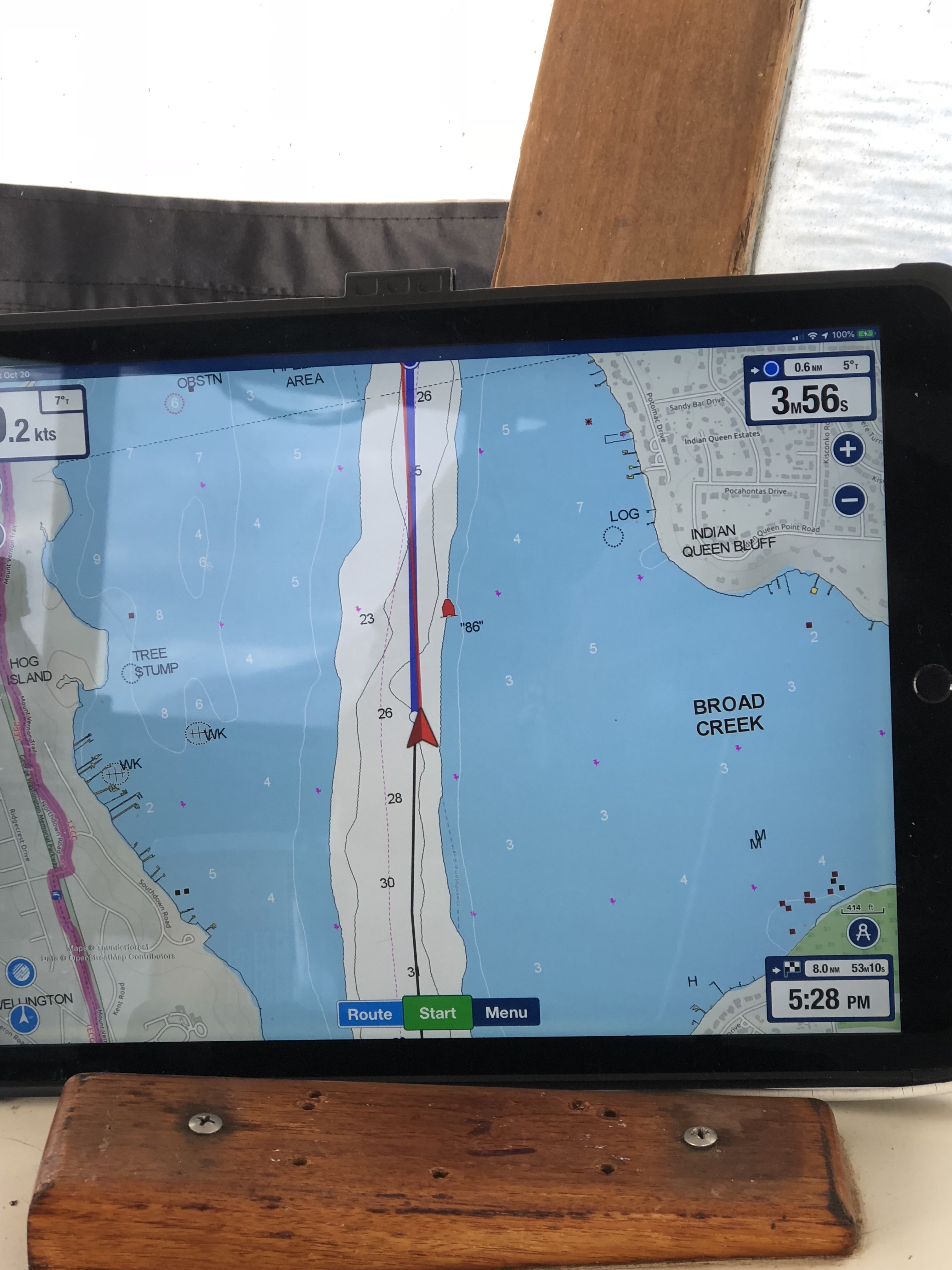
We finally passed under the Wilson Bridge (I-95 12 lane bridge) and into the open Potomac River. We approached the National Harbor resort area and marina being very careful to watch for more of the bright yellow Water Taxi vessels as they move rather rapidly and cause wakes that can seriously rock your world. This wake rocking seriously aggravates The Duchess causing her to express her indignant responses.
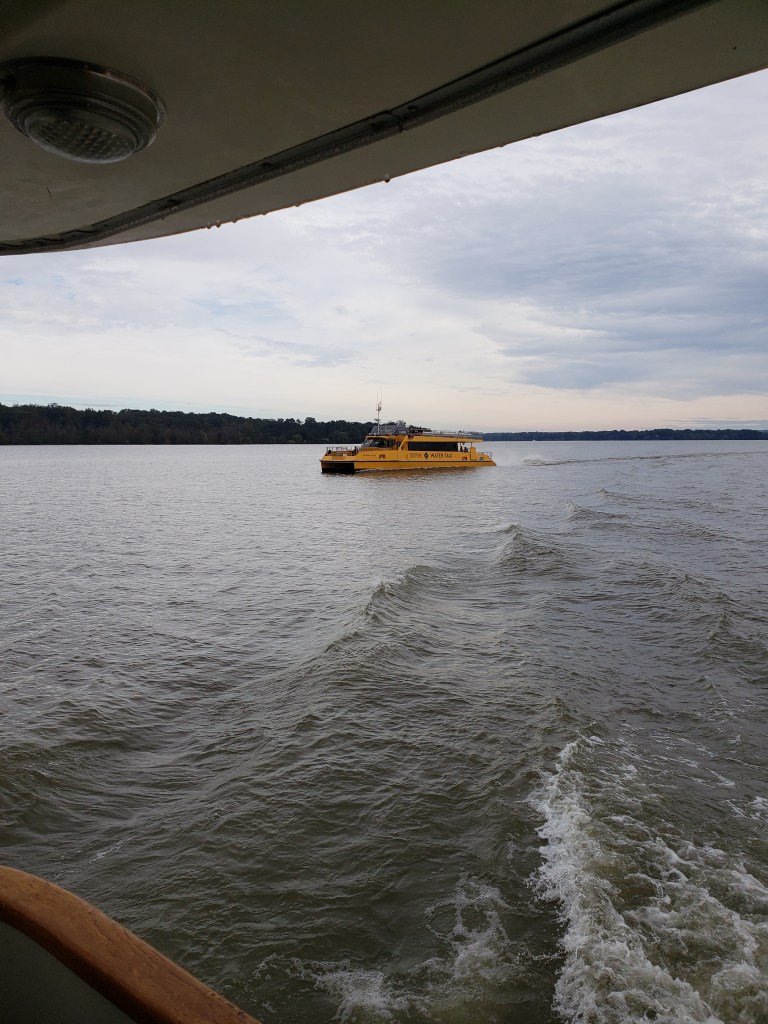
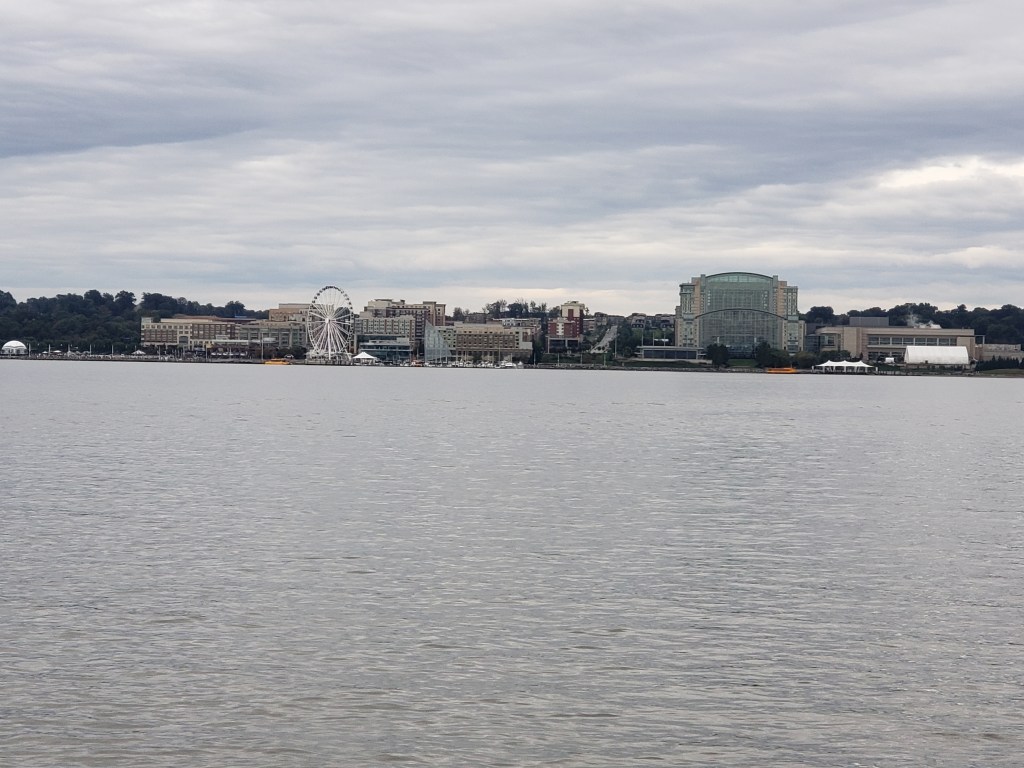
Getting to the Marina, up the Occoquan River, we had called ahead to let the Marina staff know we were just a short distance away and when we arrived, found a smaller 20 foot runabout ski type boat at the fuel dock. We had to hold in place waiting for them to get their fuel and get out of our way. Holding in place with a large vessel is not a simple or easy thing to do and I kept hoping the folks would get serviced and out of our way. Things got a little crazy for a while, but the folks finally finished their fueling, drained and disposed of their beer cans, pulling away from the dock. The marina attendants motioned us into the fuel dock and helped us tie off.

They then had me read our credit card into the diesel pump, ran the hose to the filler inlet on the side deck and began pumping. In most marinas on the Chesapeake watershed, the marina operator is supposed to pump all fuel, to prevent spillage of gasoline or diesel fuel into the waters.
The fuel level was quite low and our fuel expense was 900 dollars at 3.29 per gallon. These pumps are designed to shut off at 300 dollars so we had to read our card three times to reach the full mark.
But we had not put any diesel fuel into the old girl since October of 2016 almost two years before. Of course we also didn’t do a lot of boating in those two years, because of various engine related problems.
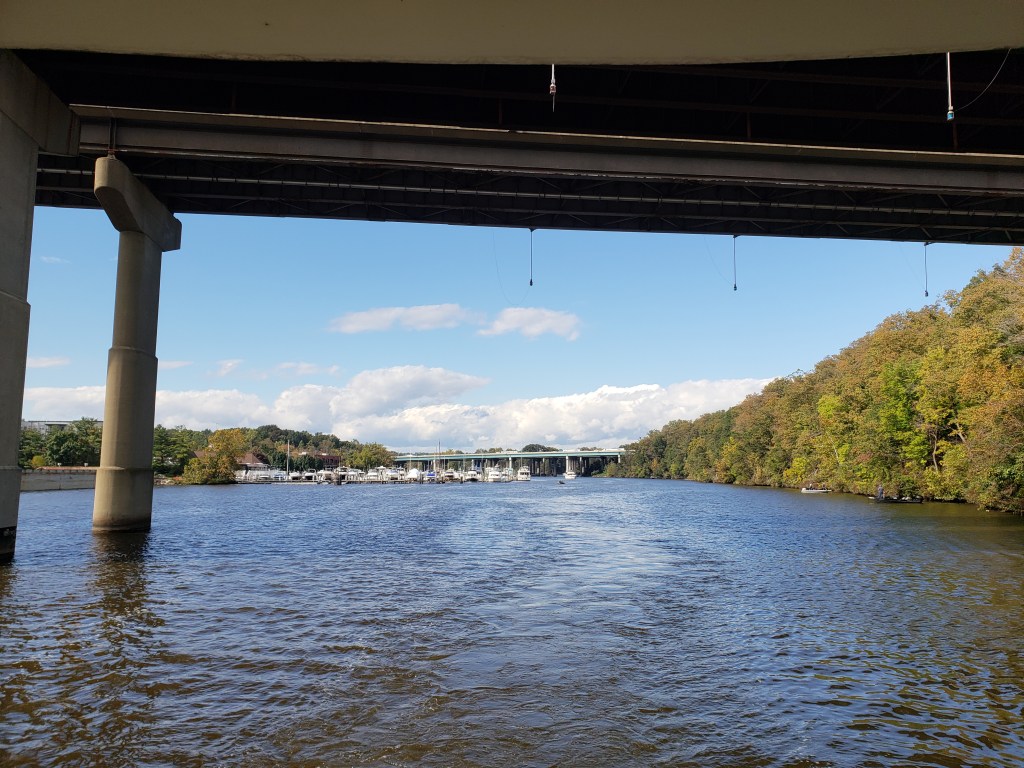
My next blog entries will address some of those things. Since we obviously will not be doing a lot of long cruises for the near future, that is one reason why I haven’t been doing much blogging, I had a thought that folks might like to have the benefit of our experiences with being full time live aboard people and decide if that is something they are interested in.
So, if you want to experience, in words and photos what it is like to live aboard a large motor yacht (not huge, but large), stay tuned. Will put out the first issue of the new approach in a couple of days or less.
Later.
 Misty Lady Thought and Comment